If I Had a Second Home, It Would Look Exactly Like This
The moment these mid-century interiors appeared on my Instagram feed, I felt a real jolt of excitement. I held my phone up to my husband and told him that if I ever had a second home, this would be the style I would choose without hesitation. Something about the colors, the curves, the tiles, the…
The moment these mid-century interiors appeared on my Instagram feed, I felt a real jolt of excitement. I held my phone up to my husband and told him that if I ever had a second home, this would be the style I would choose without hesitation.
Something about the colors, the curves, the tiles, the way these rooms felt alive and warm spoke directly to that part of me that loves old-world craftsmanship mixed with playful modern energy.
I spent the next hour studying every corner, imagining how it would feel to walk across the floors, sit by the fireplaces, and cook in these kitchens.
Today I want to share four mid-century spaces that made me fall in love all over again, along with the stories, influences, and decades behind them.
The Living Room: Soft Geometry and Storytelling Tiles
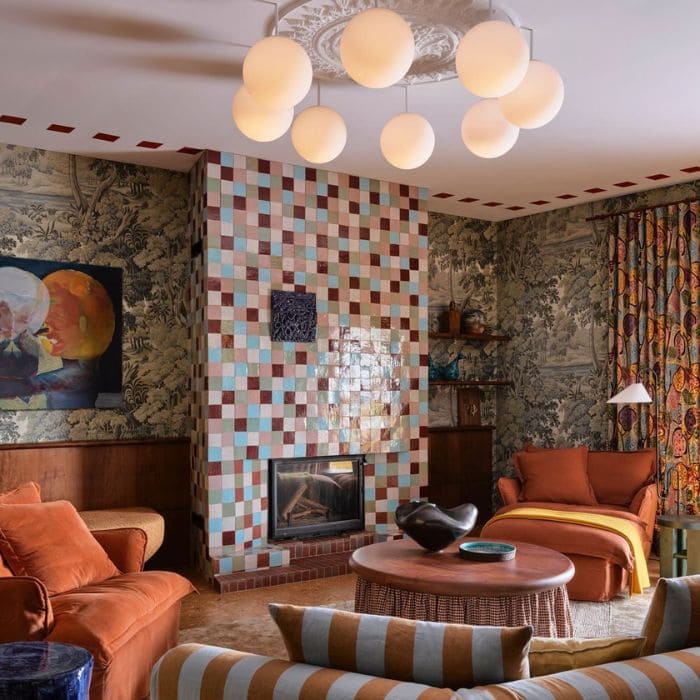
The living room with the patchwork tile fireplace captured me immediately. It feels like a gentle blend of late-1960s Italian modernism and cozy Scandinavian comfort, where shapes stay soft and colors feel warm enough to hold you in place.
The oversized globe lighting fixture creates a quiet drama overhead, the striped sofa adds a friendly rhythm, and the terracotta upholstery makes the whole room glow.
What I love most is how the space feels expressive without being overwhelming. It is artistic, but you can still imagine curling up with a blanket and talking for hours.
During the 1950s and 60s, European designers began experimenting with small handmade tiles in earthy colors to bring life to their fireplaces. That tradition lives in this room the tiles feel nostalgic, tactile, and deeply human.
This living room made me wish I could step into the photo just to hear how sound carries in a room this warm.
The Kitchen: Curves, Clay, and the Spirit of the 1970s
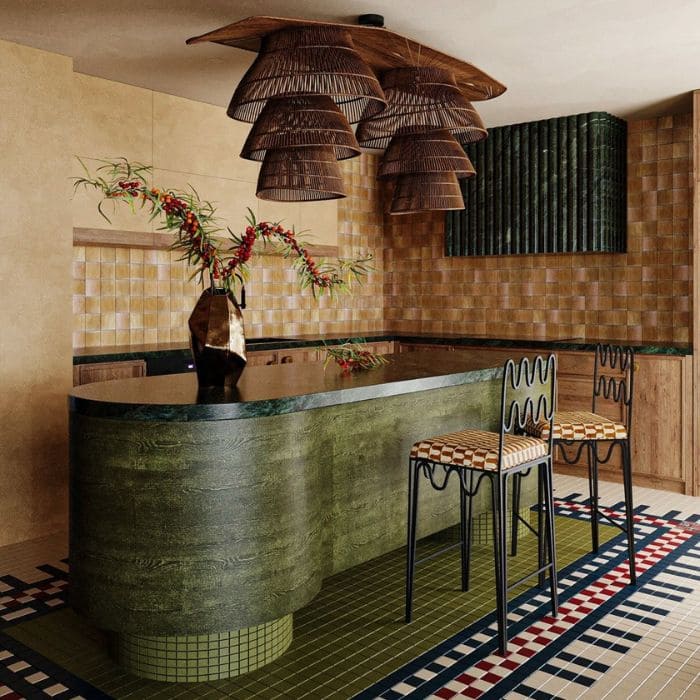
The curved olive-green kitchen island is the kind of design you remember long after you scroll past it.
Kitchens in the 1950s and 60s often leaned toward futuristic shapes because designers believed curves made rooms feel more fluid and natural, almost like water moving through a home.
The layered pendant lights above the island reminded me of early Danish lighting experiments, where shadows and texture mattered just as much as brightness.
Then there is the terracotta kitchen with the rounded column and soft marble backsplash.
That one feels like a love letter to 1970s Mediterranean homes, where clay, stone, and earthy pigments created warmth even on ordinary days. It feels like a place where a pot of soup always smells like herbs and garlic, and where conversations stretch long after dinner ends.
I imagined myself chopping vegetables while sunlight moves across the tilework, grateful that a kitchen could feel both artistic and deeply grounded.
The Dining Room: A Moody, Intimate Escape
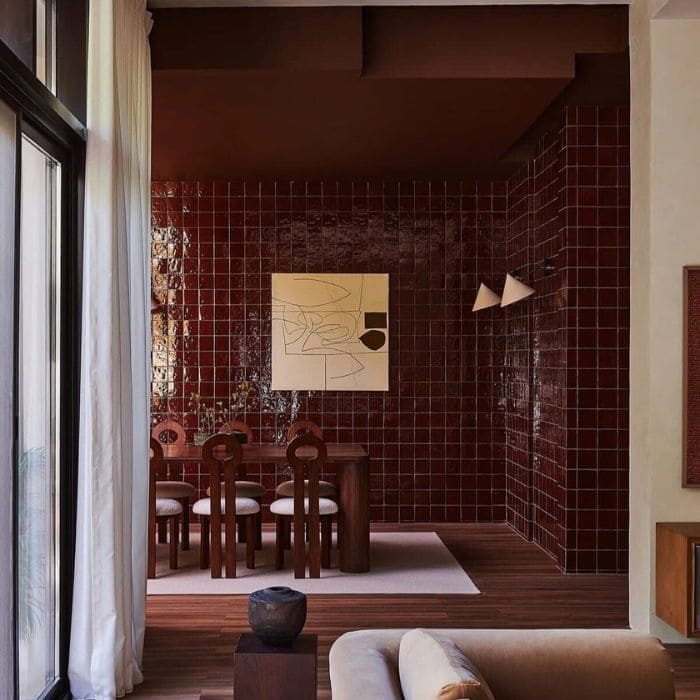
When I first saw the burgundy-tiled dining room, I felt as though I had entered a 1970s supper club that had been beautifully preserved.
The glossy walls shine just enough to reflect candlelight, and the sculptural wood chairs remind me of early 1980s postmodern furniture that celebrated bold, unconventional shapes. The combination gives the room a sense of intimacy and mystery.
It is the kind of place where friends would linger for hours, where a simple dinner becomes a memory because the atmosphere wraps around you in such a comforting way.
Mid-century dining rooms often played with higher contrast than other rooms in the home, and this one follows that spirit. Deep tones, dramatic tile, and warm wood all come together to create a space that feels both nostalgic and surprisingly modern.
The Mantel: A Quiet Center With Timeless Influence
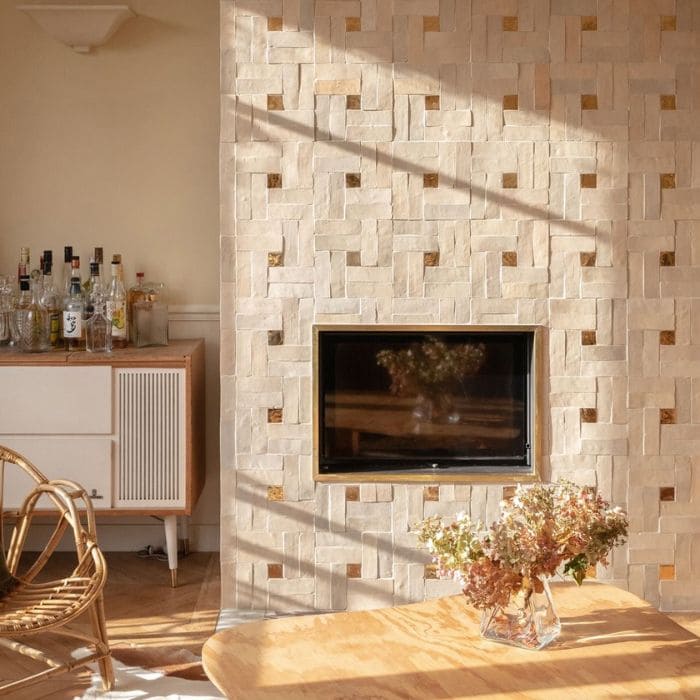
The tiled fireplaces in these images stayed in my mind long after I closed my Instagram app. Whether the tile was soft blush, creamy ivory, or richly patterned, each mantel carried a sense of history.
The tall cream-colored fireplace with its perfect grid pattern felt especially calming. It draws from Japanese-inspired minimalism that became popular from the mid-1950s to early 1970s, when designers began focusing on clean geometry, balanced proportions, and natural materials.
What I love is how these mantels manage to feel both architectural and gentle. They do not shout for attention, yet they become the heart of the room.
They warm the space with structure and presence, reminding you that a fireplace has always been more than a heat source.
This Style Still Feels So Fresh Today
As I studied these spaces, I realized why mid-century design still pulls so strongly on people like me. It has this rare ability to balance nostalgia and modernity.
The colors feel warm and earthy, the shapes feel kind and welcoming, and the craftsmanship reflects a time when people took pride in the details.
Even though the roots of these designs stretch back seventy years, they still look alive today because they were built on ideas that never truly go out of style comfort, artistry, and the courage to play.
I told my husband again, “My second home will look exactly like this,” and he just laughed in that way he does when he knows I am already decorating a house that doesn’t exist yet.
But I meant every word. These images sparked something in me, and sharing them feels like sharing a little dream.