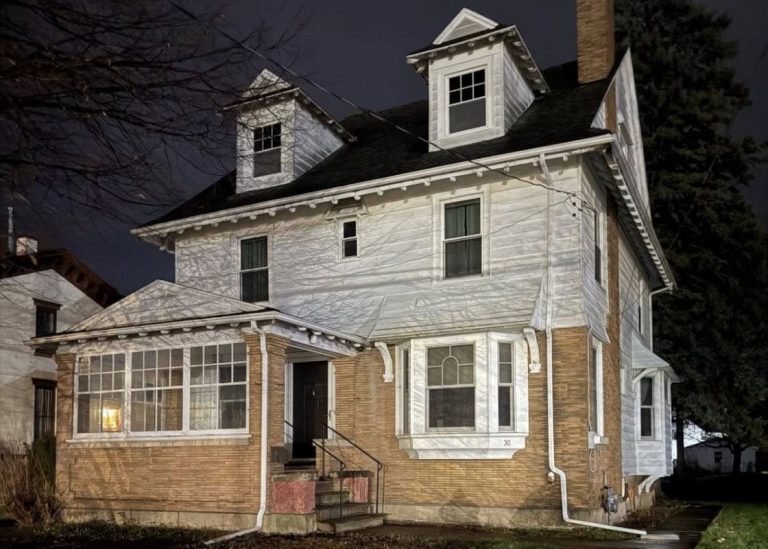
A House That Refuses to Be Just One Thing
I did not expect to feel so immediately at ease the moment I stepped inside her house, but there was something about the way the light moved across the room that made me slow down without thinking about it. The owner greeted me warmly, almost casually, as if welcoming someone into a space that had…
I did not expect to feel so immediately at ease the moment I stepped inside her house, but there was something about the way the light moved across the room that made me slow down without thinking about it.
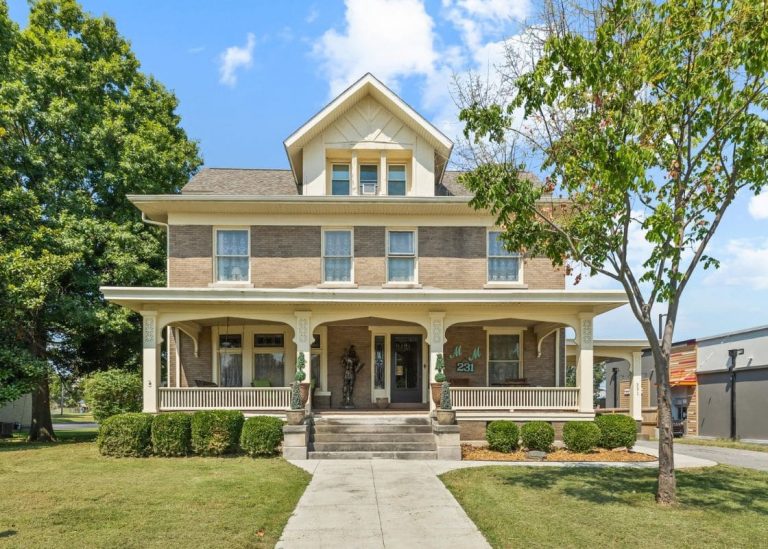
The owner greeted me warmly, almost casually, as if welcoming someone into a space that had already been lived in deeply rather than curated for impression, and she told me right away that this was a 1924 Sears kit house, the Alhambra model, with a living room that used to be two separate rooms before a former owner opened it up.
She said it so plainly, without reverence or nostalgia, and that set the tone for everything I noticed afterward.
Sunlight as the First Design Choice
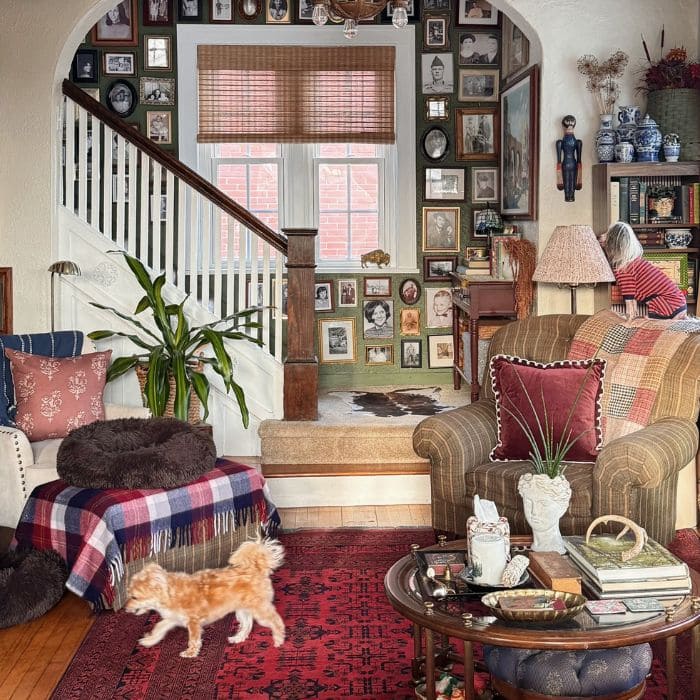
The living room is large, wide enough that your eyes travel before they settle, and the sunlight is not decorative but structural.
It enters through tall windows and moves freely across rugs, furniture, and walls, landing on objects that seem chosen because they could hold light rather than compete with it.
The windows do not feel dressed to impress. Curtains frame them softly, patterned but restrained, allowing brightness to pass through without glare.
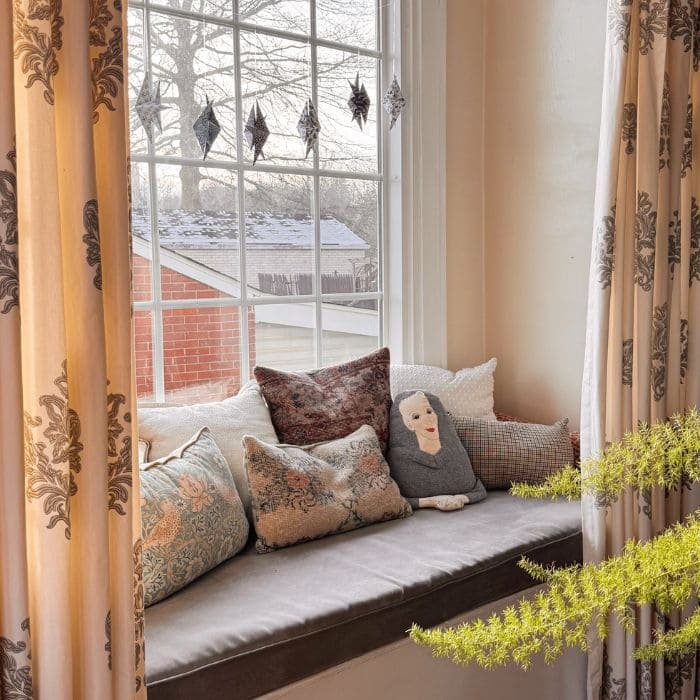
In one corner, a window seat holds an arrangement of pillows that feel collected rather than matched, as if each one arrived at a different moment in her life and stayed because it earned its place.
When I sat there for a moment, the seat felt like it had already absorbed years of quiet afternoons, reading breaks, and passing thoughts. Nothing about it asked to be photographed, and yet it was impossible not to photograph.
This Is Not a Vintage House
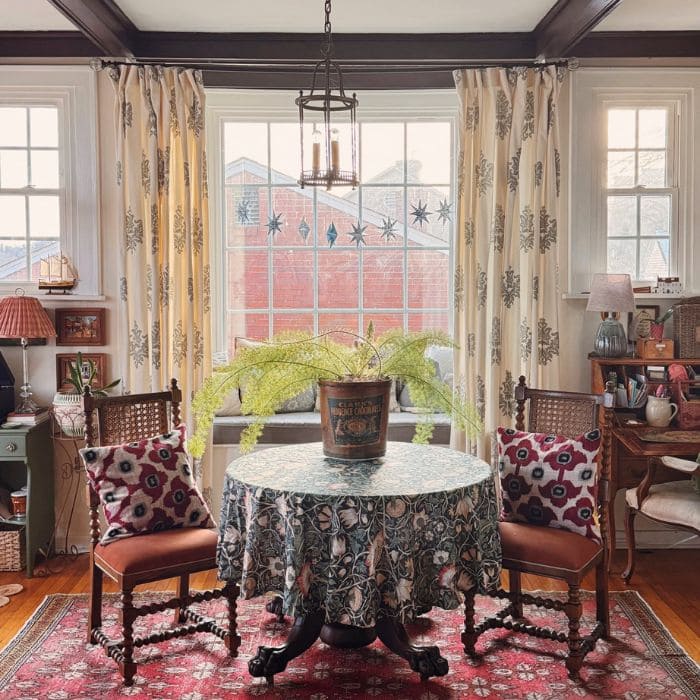
She said it herself, almost laughing, when I mentioned the word vintage. “I don’t think that’s what this is,” she told me, and the more I walked through the space, the more I understood what she meant.
This house is layered, yes, but not precious. Objects overlap in ways that suggest daily use rather than display.
A gallery wall of framed photographs fills an entire section near the stairs, mixing faces, generations, sizes, and frames without hierarchy, as if memory itself decided the arrangement instead of a plan.
You can tell these photos were not hung all at once. They accumulated, slowly, over years.
Furniture That Knows How to Stay
The seating does not follow a set. Chairs are sturdy and worn in the right places. And upholstery shows texture, not trend.
Patterns repeat gently, reds and earth tones grounding the room rather than energizing it, and every surface seems to invite touch rather than caution.
A small dog moves easily across the rug, unbothered by arrangement, which tells you more than any design label ever could. Pets live comfortably here. Plants trail and reach without strict pruning. Nothing feels staged for longevity. It is already lasting.
Even the coffee table feels like a pause rather than a centerpiece, holding objects that feel chosen for use and memory instead of symmetry.
The Fireplace as an Anchor
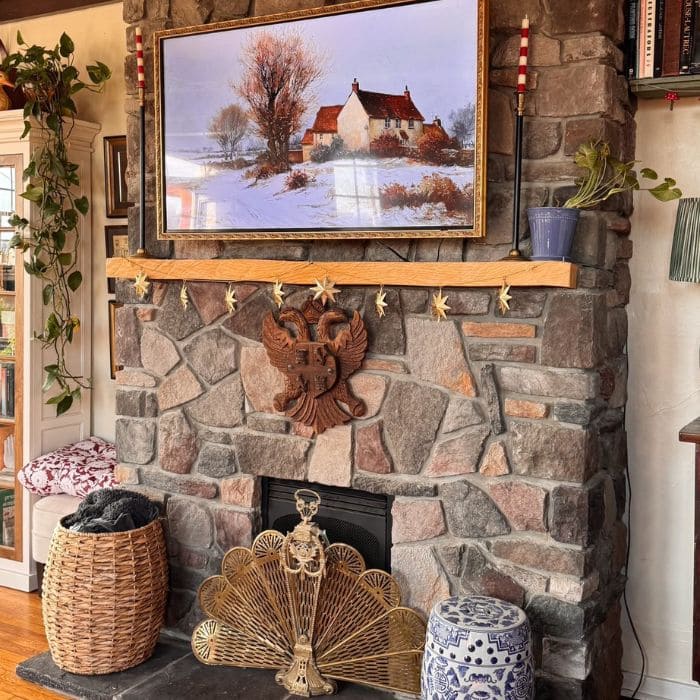
The stone fireplace does not dominate the room, even though it easily could. Instead, it holds everything steady.
The stones are irregular, textured, honest, and the mantle carries objects that feel placed over time, not styled in a single afternoon.
Above it, the artwork does not announce importance. It rests there quietly, supported by the stone rather than elevated by it. Candlesticks, small details, and a fire screen with personality all coexist without competing.
Storage That Feels Like Living
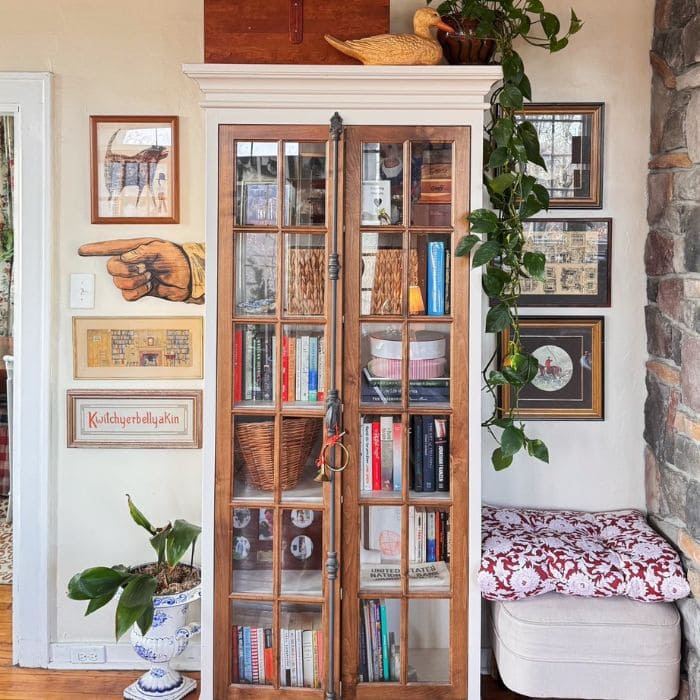
One of my favorite corners is the tall cabinet filled with books, baskets, and objects that feel half-organized, half-intuitive. A plant spills downward along its side, softening the edges and blurring the line between furniture and life.
Nothing is hidden for the sake of cleanliness. Things are visible because they are used.
You can sense that this cabinet has been opened thousands of times without ceremony, and that matters more than how it looks when closed.