A Victorian Gem in My Neighborhood
There is a house in my neighborhood that everyone knows, mostly because it sat quietly for years, wrapped in its own charm, like an unopened storybook. Most people walked past it without a second glance, thinking it was too much or too old-fashioned. It’s a full Victorian, after all, and younger buyers often shy away…
There is a house in my neighborhood that everyone knows, mostly because it sat quietly for years, wrapped in its own charm, like an unopened storybook.
Most people walked past it without a second glance, thinking it was too much or too old-fashioned. It’s a full Victorian, after all, and younger buyers often shy away from the ornate details and the maintenance such homes demand.
But last month, something wonderful happened. A family of five, plus one very polite dog, moved in and filled its empty rooms with life again.
Before the sale was finalized, I had the rare chance to step inside and that single visit changed the way I look at Victorian homes forever.
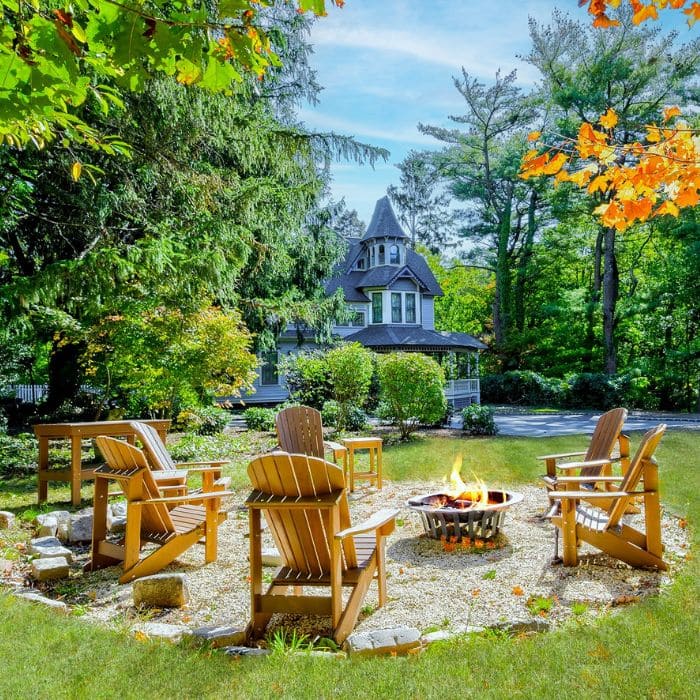
Victorian houses, named after Queen Victoria’s reign between 1837 and 1901, were built during a time when architecture was not rushed or simplified. Instead, every surface held meaning.
Towers, turrets, gingerbread trim, patterned shingles, stained glass, elaborate wallpapers, everything was meant to show craftsmanship and joy.
The one in our neighborhood is believed to date back to the early 1890s, built during the Queen Anne revival, when asymmetry, bold colors, and hand-carved details were impressively popular.
Walking through its door was like stepping into a perfectly preserved piece of American architectural history.
The Porch and Tower: Where the Victorian Story Begins
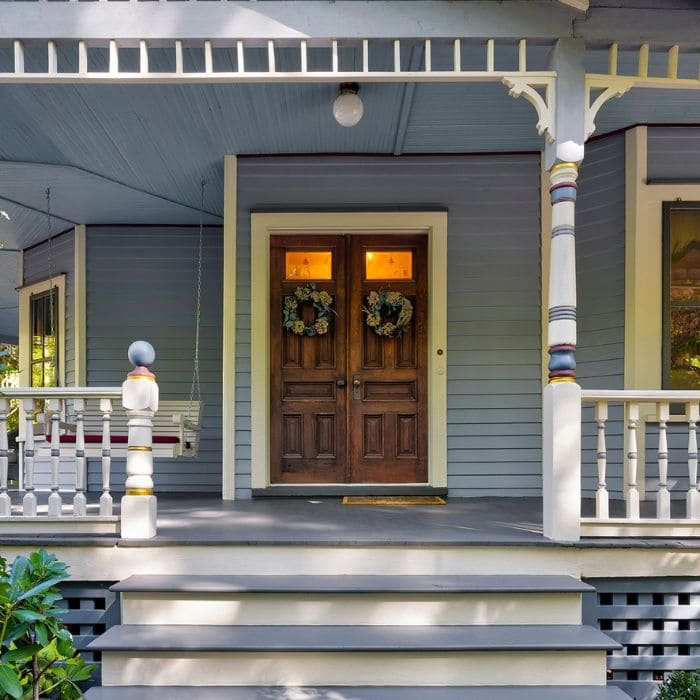
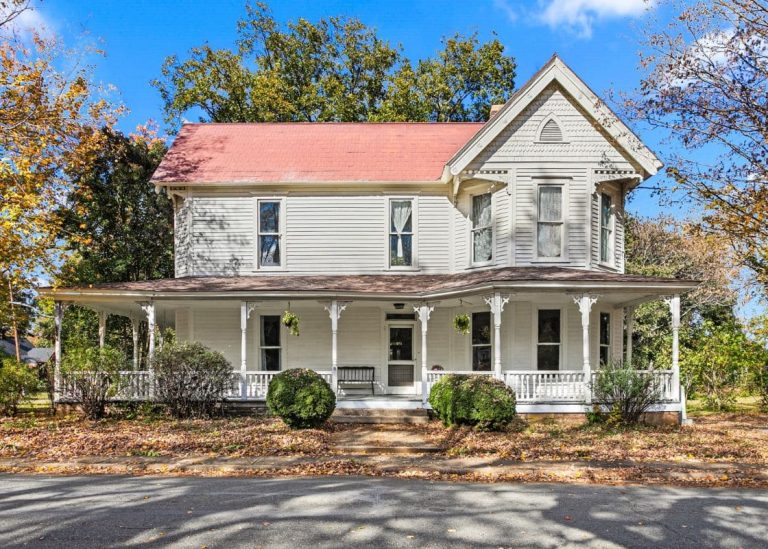
The first thing that struck me was the wraparound porch – wide, welcoming, and supported by turned spindles and carved brackets.
Victorian porches were designed for presence more than privacy. In the 19th century, families spent evenings outside greeting neighbors, enjoying breezes, and watching the street.
But the tower is what truly tells its origin. Homes built with a corner tower or turret were often inspired by Queen Anne Victorian design, meant to showcase artistic flair and symbolize a kind of whimsical elegance.
The windows in the tower let light pour into the upper rooms from three angles, something Victorians loved for morning reading or afternoon tea.
This house has all the traits of a well-loved 1890s beauty, even the gentle slope of the roof and the layered trim reflect the craftsmanship of that era.
The Grand Entry Hall: Music, Pattern, and Victorian Hospitality
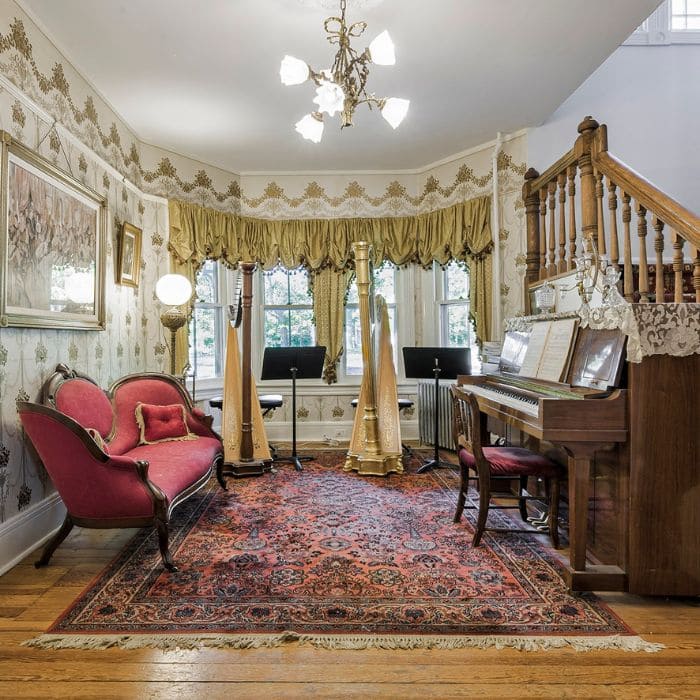
Once inside, the first room I stepped into held three harps, a beautiful upright piano, and wallpaper rich with gold motifs. Victorian families adored music, it wasn’t just entertainment but a symbol of refinement and social connection.
If a house had a dedicated music space like this one, it often meant the family once hosted gatherings where neighbors stood around a piano to sing, or listened while someone performed a new waltz.
The staircase, sweeping, wooden, and gracefully carved, was an artwork of its own. In Victorian homes, staircases were meant to impress. This one captures that perfectly with its ornate balusters, polished railing, and carved posts that show off the wood’s natural depth.
Victorian wallpaper played a huge role in home identity, and this house still wears its patterns proudly with floral borders, scalloped edges, repeating gold elements.
These were popular around the 1880s-1890s, when mass-produced wallpaper became accessible and homeowners loved expressing personality through it.
The Parlor: A Room for Guests, Gossip, and Good China
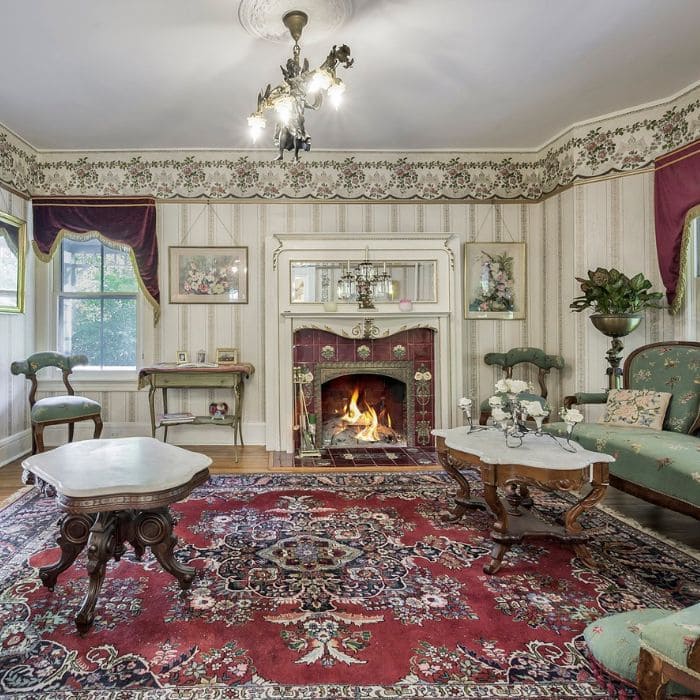
Stepping into the parlor felt like stepping into a velvet-lined story. The furnishings including plush red settees, marble-top tables, patterned carpets were all reminiscent of authentic Victorian parlor culture.
During the Victorian era, the parlor was the best room, reserved for honored guests or special occasions.
The ornate fireplace, framed by decorative tiles and topped with a delicate mantle, added to the warmth of the space. Victorian fireplaces often showcased craftsmanship, with tile imports from England or local hand-painted designs.
The parlor carpet, rich with burgundy and floral motifs, mimicked those imported Persian-inspired patterns that became fashionable in the late 19th century.
Victorians believed a well-decorated parlor reflected good morals and social standing, so they filled them with vases, framed art, lace drapery, and carefully arranged furniture. This room still holds all of that energy.
The Dining Room: Where Pattern Meets Ceremony
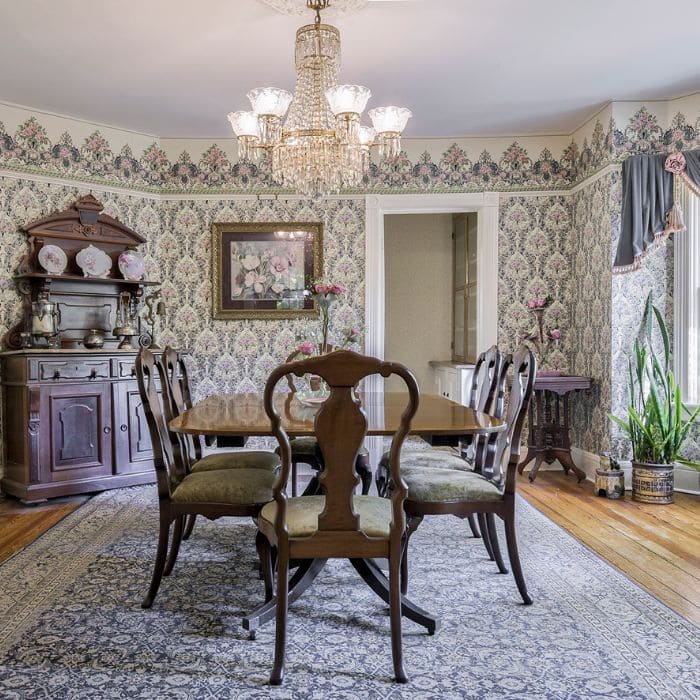
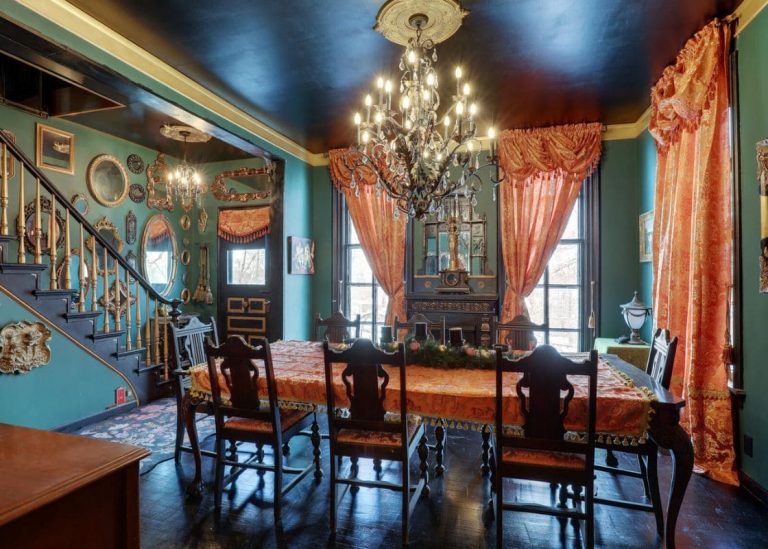
The dining room took my breath away with its layered wallpaper – delicate, romantic, and distinctly Victorian. Wallpaper during this time often mixed multiple patterns in one room, with borders, panels, and repeating motifs meant to create visual abundance.
The chandelier, sparkling with crystals and brass touches, is very characteristic of turn-of-the-century lighting, transitioning from gas to electric fixtures. The Victorian era embraced ornate chandeliers because they represented progress and elegance.
The wooden dining set, polished and heavy with carved details, looks like something passed down through generations. Many Victorian families invested in dining room furniture because shared meals and hosting were central to social etiquette.
Additionally, the corner cabinet displaying plates and silverware hints at a long tradition of Sunday dinners and family gatherings, a custom still very much alive in homes like this.
The Bedroom: A Quiet Retreat in Dark Wood and Green Velvet
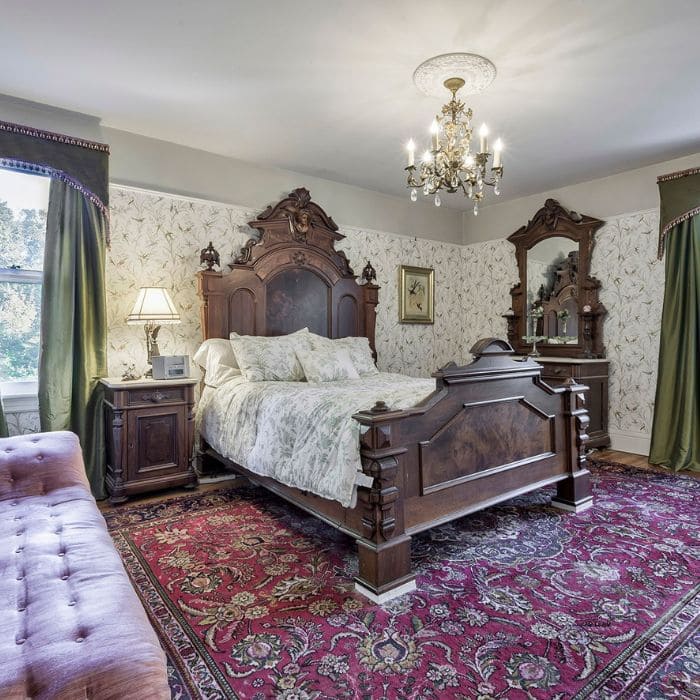
Victorian bedrooms were lush, often decorated with rich fabrics and heavy furniture. This room, with its grand carved bed frame, velvet drapes, floral wallpaper, and ruby-tone rug, captures that history.
The dark wood furniture reflects the Renaissance Revival style that was immensely popular during the 1870-1890 period. Pieces like the bed and dresser were often handcrafted from walnut or mahogany, designed to last for generations.
The deep green curtains and floral patterns were symbolic of Victorian appreciation for nature and luxury. The delicate light fixture overhead completes the look, with its soft golden glow that once would have been candlelit or gas-lit.
The Tower Sitting Room: A Sunlit Victorian Escape
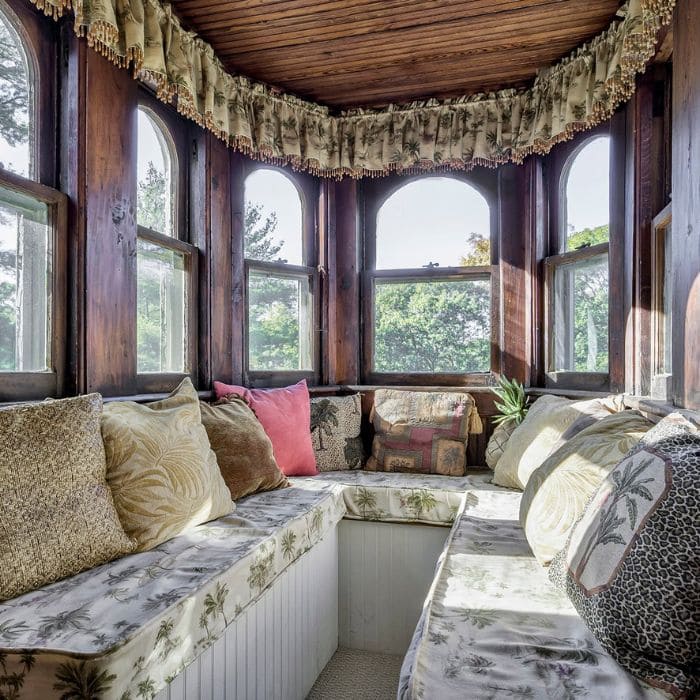
I am really impressed by the rooms sitting inside the tower. Wrapped in arched windows and warmed by wood paneling, it feels like a hidden retreat Victorian children might have used for reading, sewing, or daydreaming.
These tower nooks were loved during the era because they offered light from multiple angles, perfect for embroidery or letter-writing.
Today, the room still invites slow moments with a quiet morning, a book, a cup of tea, and a seat among the cushions.
The Dressing Room: Lace Curtains and Feminine Elegance
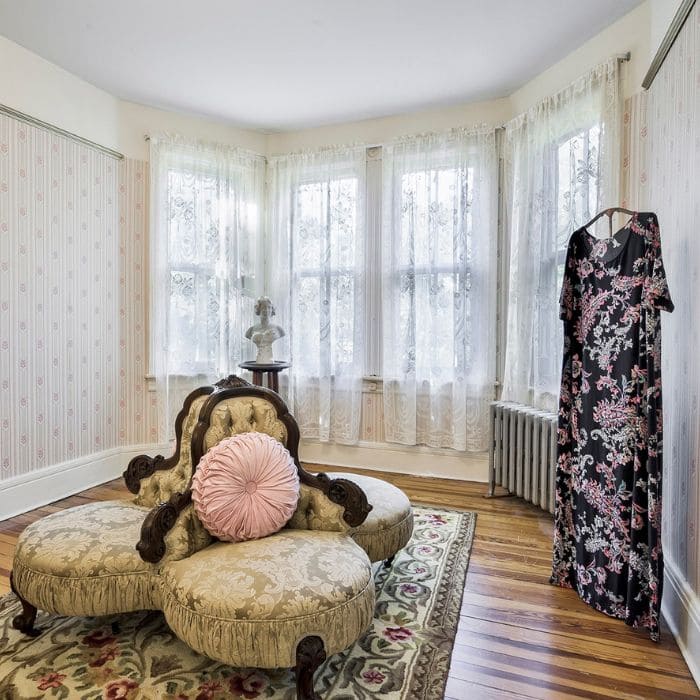
The dressing room, simple but graceful, carries the softness Victorian women loved. Lace curtains, floral wallpaper, and a fainting couch complete the space.
Victorian women often spent time in rooms like this preparing for the day, storing special garments, or writing personal letters.
The plush round seating furniture is something you rarely see today—designed for conversation or for ladies to rest while choosing accessories.
A House That Needed the Right Family
For years, this house waited. Most families said it wasn’t modern enough, or would require too much work.
But the truth is, Victorian homes are stories carved in wood and woven into wallpaper. They’re meant for people who appreciate craftsmanship, history, and the kind of charm you only find in places built slowly and lovingly.
Now, with a lively family of five and their joyful dog running through its rooms, the house finally feels complete. Its music room will hear laughter again and its parlor will welcome guests again.