The Wall That Survived the Eighties
This wall comes from my parents’ old house, down in the basement, where a wet bar once existed with absolutely no hesitation about what decade it belonged to, because when the 1980s arrived in that house, they came in loud, reflective, and glowing. There were mirrored walls everywhere, the kind made of square tiles that…
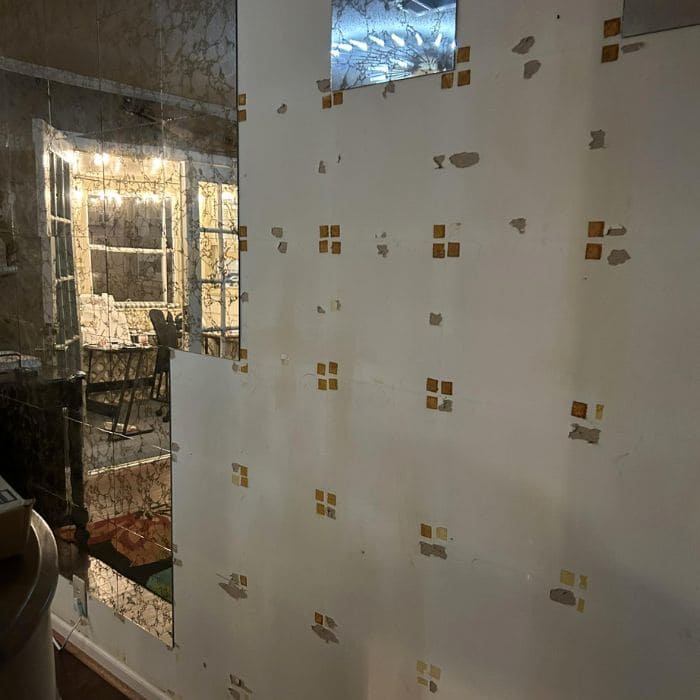
This wall comes from my parents’ old house, down in the basement, where a wet bar once existed with absolutely no hesitation about what decade it belonged to, because when the 1980s arrived in that house, they came in loud, reflective, and glowing.
There were mirrored walls everywhere, the kind made of square tiles that multiplied every movement once the black lights were switched on, turning the room into something halfway between a nightclub and a sunburn reveal station.
A white leather quilted bar wrapped the space with confidence that bordered on aggressive, while green and black marbled tile reflected every bit of light it could catch.
And then there was the aquarium, a truly enormous half-wall tank that divided the room and somehow felt completely reasonable at the time, as if a basement bar absolutely needed a built-in ocean feature.
It was spectacular in a way that only makes sense decades later, when you can laugh about it without having to live inside it anymore.
When the Mirrors Came Down
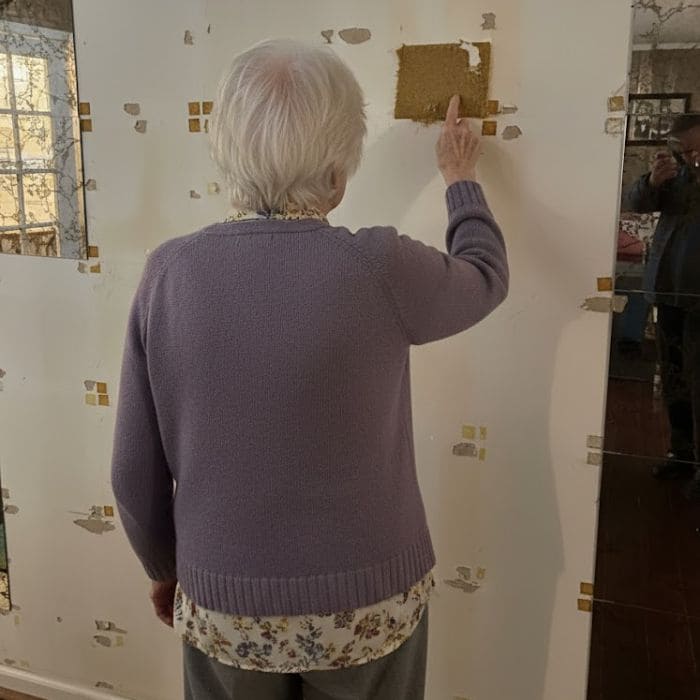
The mirrors eventually had to go, not because they were broken, but because they had finished telling the truth too clearly. Under black lights, they exposed everything, especially the kind of sun damage was an afterthought and being outside was the default setting.
When they were removed, they did not leave quietly.
Instead of clean drywall underneath, the wall revealed itself in fragments. Thick adhesive clung stubbornly in uneven patches. Small sections of drywall paper tore away with the tiles, exposing rough gray underlayers.
In some places, the backing from the mirror tiles remained as little gold-toned squares, still firmly attached, as if refusing to admit the party was over.
When my parents looked at the wall afterward, they said it plainly: “It can’t be clean again.”
Deciding What Clean Actually Meant
I didn’t argue with them, but I also didn’t accept that statement in the way they expected, because I wasn’t interested in making the wall perfect or pretending it had never been what it was.
I just wanted it to be usable again, calm again, something you could stand in front of without feeling like you were staring at a mistake.
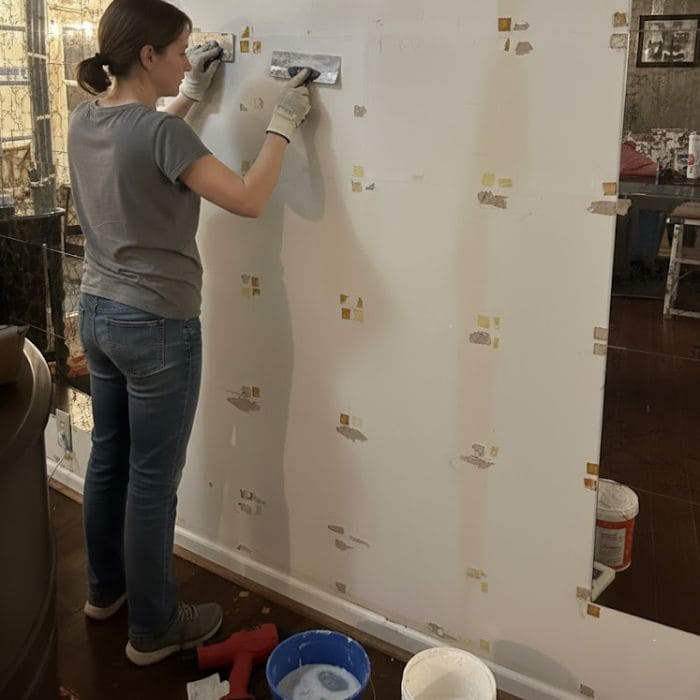
The first step was slow scraping, using a wide putty knife and deliberately resisting the urge to rush, because rushing only caused more drywall paper to tear.
Some of the adhesive softened with gentle pressure, while other sections required a heat gun held at a careful distance, just enough warmth to loosen the glue without scorching the wall beneath it.
After scraping, I washed the surface with a mix of warm water, dish soap, and a small amount of vinegar, working in sections and wiping repeatedly until the wall stopped feeling tacky under my fingers.
It took longer than I expected, because residue doesn’t always announce itself visually, and you only notice it when your sponge keeps catching.
Once the wall was fully dry, I sealed the damaged areas with a stain-blocking primer, especially over the torn drywall paper, because skipping that step would have guaranteed bubbling later.
Only after sealing did I move on to patching, using lightweight joint compound applied in thin layers rather than one heavy pass, letting each layer dry completely before sanding lightly with a fine-grit sponge.
Letting the Wall Be Honest

I did not try to eliminate every mark. Some shallow indentations stayed. A few faint outlines remained where mirror tiles once sat in neat grids.
Instead of fighting those ghosts, I focused on evening out the surface so that light would move across it smoothly, without catching on sharp edges or obvious damage.
After a final sanding and another coat of primer, the wall was ready for paint, and I chose a soft, forgiving finish rather than something high-gloss that would have betrayed every imperfection.
When the paint went on, it didn’t transform the wall into something new.